






The right to information, an act of 2005, is the result of favorable interpretation of legal regulation for people by judiciary, understanding of futility of secrecy regime and fierce struggle of the people. The people fought for just information and then, for information’s right. There are two facets of this right information, which imposes a positive duty on the government to disclose certain information, which the citizen may not even know to be in existence.
“RIGHT TO INFORMATION” guaranteed for the citizen, imposes a positive duty on the government to disclose information. In a country with high percentage of illiteracy and lack of awareness and knowledge about governing process and development activity and where the government and its bureaucratic steel frame, finds more interest in secrecy. It is essential is to tell them what was happening and provide an opportunity to know more about that aspect. Article 19(1) A, of the constitution, guarantees the fundamental rights to freedom of speech and expression. The pre requisite is to enjoy these rights of knowledge and information. The absence of authentic information on matter of public interest only encourages wild rumors and speculations, unavoidable allegations against individual and institutions. Therefore, the right to information becomes a constitutional right, being an aspect of the right to freedom of speech and expression, which includes the right to receive information and collect information. This helps the citizens perform their fundamental duties as set out in Article 51 (A) of the constitution because a fully informed citizen could certainly be better equipped for the performance of these duties. Thus, access to information assists citizens in fulfilling these obligations.
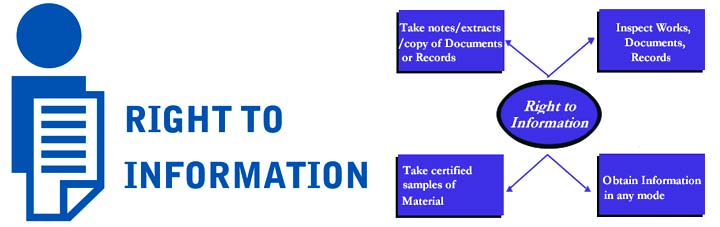
RIGHT TO INFORMATION came in to force in 12th October, 2005. The objective of right to information act is to give information to the public in accordance with the right to information act, 2005.The act provides the citizens the right to information and a secured access to the same under the public authorities control which will give rise to transparency and accountability in the working of every public authority including the central and state information commission. Now, a simple question generally asked under RIGHT TO INFORMATOION is that what actually the information is? The information means any material in any form including records, documents, memos, emails, opinions, advices, press releases, circulars, orders, logbooks, contracts, reports, papers, samples, models and data material held in any electronic form and information relating to any private body which can be accessed by a public authority under any other law for the time being inforce.Now we come to what RIGHT TO INFORMATION includes. The right to information by public will include the right to inspect works, documents, records, to take notes, extracts or certified copies of documents or records, certified samples of material or to obtain information in form of printouts, diskettes, floppies, tapes, video cassettes or in any other electronic mode or through printouts.
Procedure for seeking information:
An application is to be made in writing or through electronic means in English or Hindi or in the official language of the area to the Public Information Officer (PIO), specifying the particulars of the information sought for. The application for obtaining information under subsection (1) of section 6, shall be accompanied by an application fee of rupees ten by way of cash against proper receipt or by demand draft or bankers cheque / Indian Postal Order.
As no right can be viewed independently, the right to information also has its limitations. Therefore only that information can be provided which does not contain any information which is exempt from any sort of disclosure.